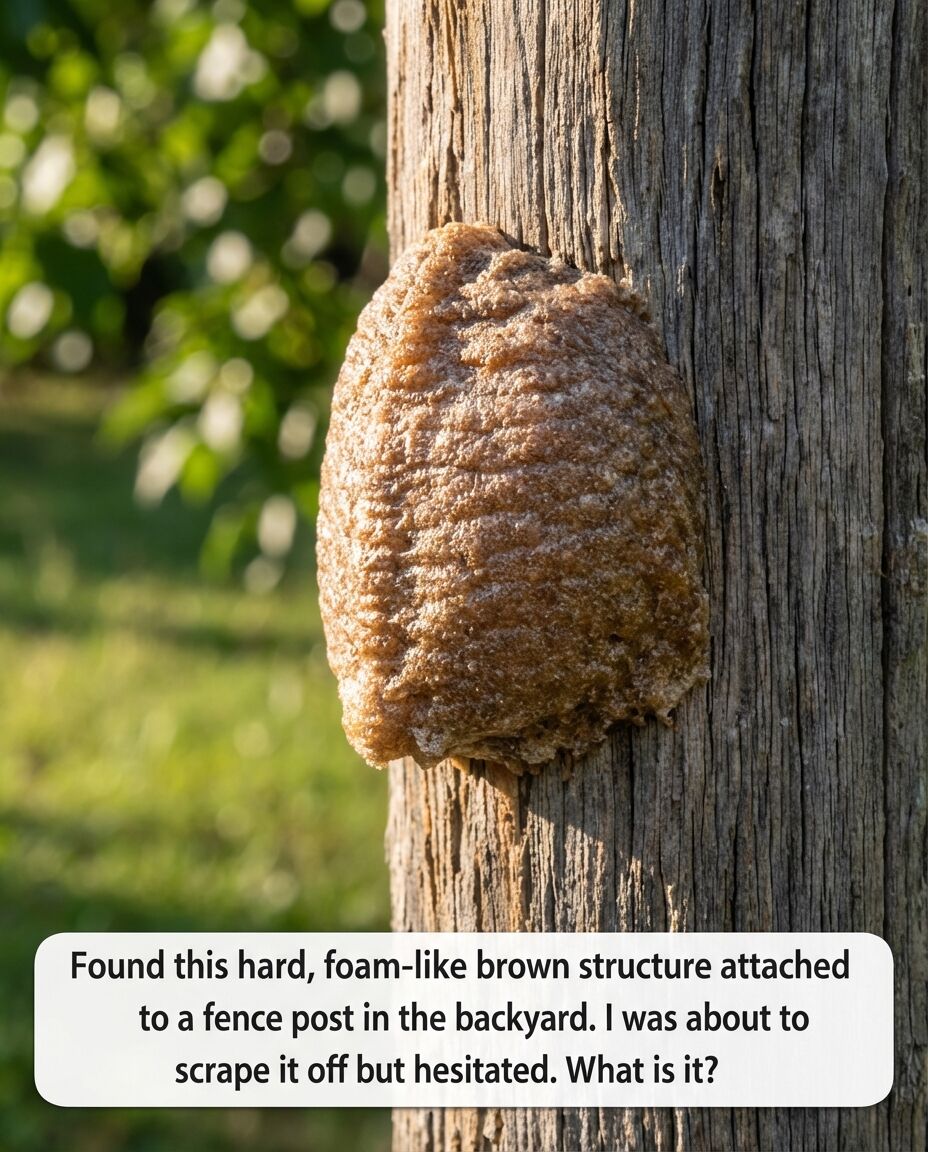
It may look like a blob of hardened foam stuck to your fence or a branch—tan, ridged, and papery, almost artificial. Many homeowners scrape it off without a second thought.
But that strange clump is an ootheca—the egg case of a praying mantis.
Months earlier, in late summer, a female mantis attached it to a sturdy surface. As she laid her eggs, she produced a frothy liquid that hardened into a tough, insulated casing. Inside, neatly arranged in rows, can be 50 to several hundred eggs, depending on the species. The shell protects them from freezing temperatures, moisture loss, and predators all winter long while the embryos rest in diapause, waiting for spring’s warmth.
When temperatures rise consistently, the case comes alive. Dozens—sometimes hundreds—of tiny mantis nymphs emerge at once. Miniature versions of adults, they quickly harden and begin hunting immediately.
Finding an ootheca in your yard is a good sign. Mantises are powerful natural pest controllers, eating aphids, flies, moths, grasshoppers, and more. A single mantis can consume thousands of insects in its lifetime, helping balance your garden without chemicals.
If you must move an ootheca, gently remove it without crushing it and secure it to a shrub or fence above ground, keeping it dry and protected. Otherwise, leave it where it is.
That small brown “foam” patch isn’t debris—it’s a winter nursery, quietly holding the next generation of your garden’s guardians.
Leave a Reply