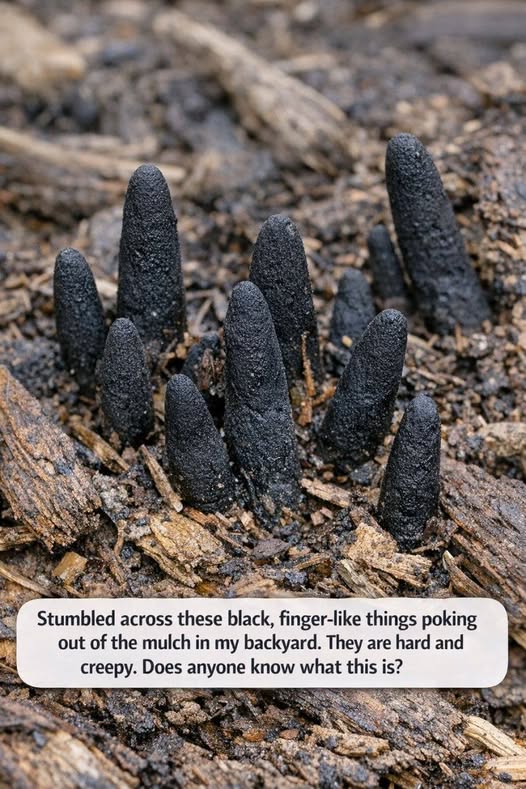
Stumbled across these black, finger-like things poking out of the mulch in my backyard. They are hard and creepy. Does anyone know what this is?.
Uncategorized
February 25, 2026adminLeave a Commenton Stumbled across these black, finger-like things poking out of the mulch in my backyard. They are hard and creepy. Does anyone know what this is?.
There are few sights in the world of gardening more chilling than looking down at your carefully manicured mulch and seeing what appear to be charred, skeletal fingers reaching out from the soil. This eerie phenomenon has startled countless homeowners, leading to frantic internet searches and a fair share of backyard nightmares. However, behind the macabre appearance lies a fascinating biological process that is essential to the health of your garden’s ecosystem.
Known colloquially as Dead Man’s Fingers, this strange growth is a testament to the hidden, complex life cycles occurring beneath our feet. This guide explores the science, safety, and spiritual role of this unsettling fungus.
1. The Macabre Aesthetics: Why They Look Like Skeletal Remains
The initial shock of finding Dead Man’s Fingers (Xylaria polymorpha) is entirely understandable. These fungi typically emerge as elongated, upright protrusions that mimic the shape and size of a human finger, often growing in clusters that resemble a hand trying to claw its way to the surface.
Color and Texture: In their youth, these “fingers” may appear pale, bluish, or even white at the tips, resembling a fingernail. As they mature, they turn a deep, soot-like black or dark brown.
Tactile Feel: Unlike the soft, squishy mushrooms we find on pizza, Xylaria polymorpha is tough and woody. If you were to touch it, it feels more like a piece of charred wood than a living organism.
2. The Ecological Role: Nature’s Master Recyclers
Despite their horror-movie name, Dead Man’s Fingers are saprobic, meaning they survive by consuming dead and decaying organic matter. They are the ultimate “clean-up crew” for your garden.
This fungus specializes in breaking down cellulose and lignin—the two toughest components of wood. When you see them in your mulch or at the base of a tree, they are performing a vital service: returning trapped nutrients back into the soil so that your flowers and shrubs can thrive. Without fungi like the Xylariaceae family, our forests and gardens would be buried under mountains of un-decayed wood.
3. Identifying the Impostors: Myths vs. Reality
Many people confuse Dead Man’s Fingers with other strange growths. It is important to distinguish them from:
Stinkhorns: These are often brightly colored (orange or red) and produce a foul-smelling slime to attract flies. Dead Man’s Fingers do not smell.
Black Knot: This is a plant disease that looks like “poop on a stick” and grows directly on the branches of cherry or plum trees. Xylaria grows from the ground or buried wood.
Animal Remains: From a distance, they can truly look like a buried animal. However, a quick look with a shovel will reveal a white, fibrous interior that is distinctly fungal, not skeletal.
4. Are They Dangerous? (People, Pets, and Plants)
The most common question homeowners ask is: “Will this kill my dog or my prize roses?”
Human/Pet Safety: Dead Man’s Fingers are not poisonous to the touch. You can handle them without fear of skin irritation. While they are not considered edible due to their woody, indigestible texture, they do not contain the lethal toxins found in some other wild mushrooms.
Garden Safety: Generally, this fungus is a friend to your garden. However, there is one caveat: if you see them growing directly from the base of a living tree, it may indicate that the heartwood of the tree is already decaying or dead. The fungus isn’t killing the tree, but it is taking advantage of the fact that the tree is already dying.
5. Management and Prevention: How to “Exorcise” Your Mulch
If the aesthetic of “corpse fingers” in your flowerbed isn’t the look you’re going for, managing them is relatively simple:
Mechanical Removal: Simply pull them up. Since they are the “fruiting body” (like an apple on a tree), removing them will hide the sight, but the underground network (mycelium) will remain.
Refresh Your Mulch: These fungi love old, damp wood. Turning your mulch or replacing it with a thinner layer can reduce the moisture levels they need to thrive.
Sunlight: Xylaria prefers shade. Pruning overhead branches to let more light reach the ground can naturally discourage their growth.
6. From Horror to Fascination: The Beauty of Mycology
Finding Dead Man’s Fingers is an invitation to explore the world of mycology. Fungi are the “internet of the soil,” connecting plants and recycling life. What looks like a scene from a horror film is actually a sign of a high-functioning, nutrient-rich backyard.
Next time you see those black fingers poking through the mulch, remember th
Leave a Reply