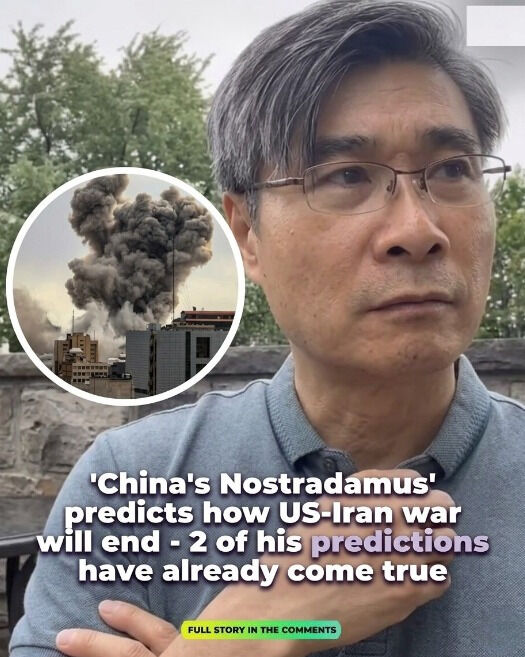
Professor Xueqin Jiang, a Chinese-Canadian educator and analyst, has attracted a growing following by examining international affairs through the lens of context rather than speculation. Through his online educational content, he interprets global developments by drawing on historical research, geopolitical trends, and strategic analysis. His approach is notable for prioritizing explanation over prediction, allowing audiences to better understand how past events and long-term patterns shape current global dynamics.
His increased visibility came after a 2024 lecture in Beijing, where he discussed major changes in international relations and explained how historical examples can help inform expectations about the future. Instead of offering definitive forecasts, Jiang focuses on recurring patterns—such as how countries react under pressure, build alliances, and adjust to uncertainty. This perspective encourages viewers to view global events not as isolated occurrences, but as part of an ongoing process influenced by strategy, policy decisions, and timing.
A key element of Jiang’s work is the concept of preparation. He frequently explores how governments assess risks, anticipate challenges, and formulate strategies in response to changing circumstances. By unpacking these decision-making processes, he emphasizes the importance of understanding the reasoning behind actions, not just the outcomes themselves. His analysis highlights the relationship between leadership, historical experience, and strategic priorities, offering a more nuanced view of international affairs.
Beyond specific examples, Jiang’s broader impact lies in encouraging critical thinking. His content invites audiences to approach global issues with a more analytical mindset—questioning sources, identifying patterns, and considering different viewpoints. In doing so, he provides an accessible way to engage with complex subjects while maintaining a clear, educational tone. The result is an approach that informs without exaggeration, helping viewers better understand an increasingly interconnected world.
Leave a Reply