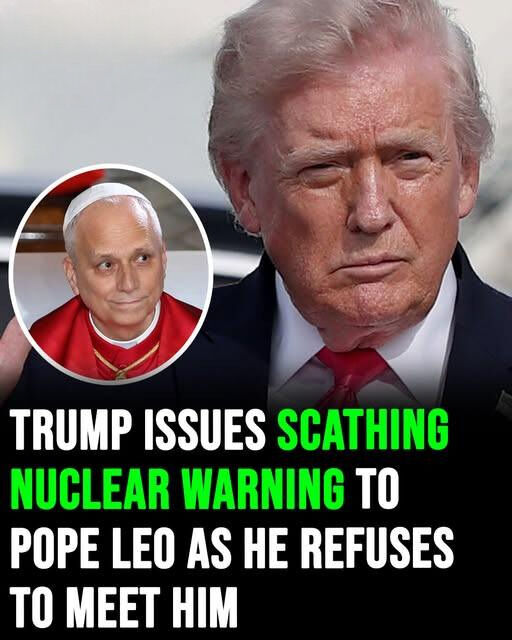
This isn’t a credible news report. It follows a familiar clickbait pattern, and several warning signs make that clear.
The claim itself is extremely unlikely and unsupported. If a U.S. president had issued any kind of nuclear warning to the Pope, it would be a major global event covered in detail by every reputable outlet, complete with confirmed facts, timelines, and official statements. None of that is present.
The language is also a giveaway. Instead of neutral, factual reporting, it relies on dramatic and exaggerated phrasing meant to provoke emotion rather than inform. That kind of storytelling tone is typical of engagement-driven content, not journalism.
Another clue is the structure, which encourages readers to keep clicking without actually providing substance. This is often paired with pages filled with unrelated advertisements—especially ones promoting questionable health products—which strongly suggests the goal is generating traffic, not sharing verified information.
In reality, this type of content is usually fabricated or heavily distorted. It’s designed to attract attention and drive clicks, often appearing on low-quality sites that mimic real news but don’t follow journalistic standards.
A simple way to assess claims like this is to check whether they appear in trusted international outlets. Real, high-impact events are quickly reported by established organizations such as Reuters, Associated Press, or BBC. If a story only shows up on obscure pages filled with ads and vague claims, it’s almost certainly not reliable.
Leave a Reply