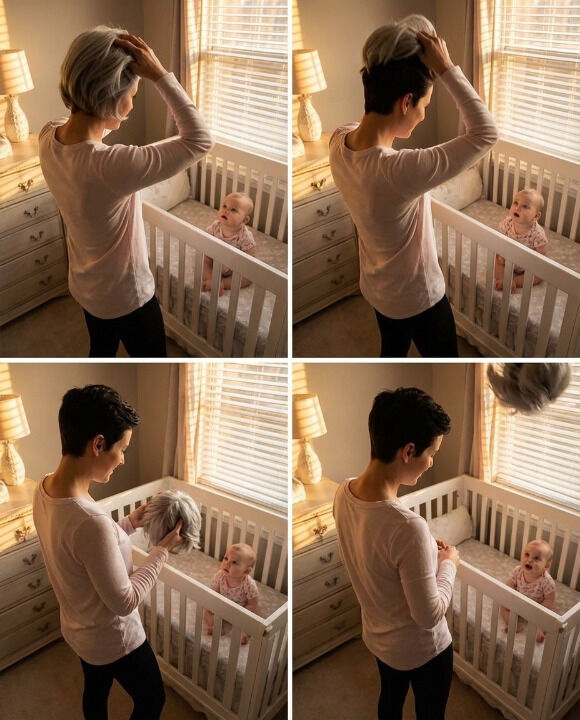
When you’re caring for infant twins on very little sleep, any form of support can feel like a lifeline. That’s what it seemed like when our babysitter first arrived—calm, confident, and able to settle my sons almost immediately. For the first time in a long while, I felt a moment of relief. So when my husband suggested a rare overnight break, I agreed, trusting everything would be fine. But later that night, a quick look at the nanny camera changed everything I thought I knew.
I watched as she removed a gray wig and carefully wiped away makeup that had made her appear older. In an instant, comfort turned into alarm. When she reached for a concealed bag, I called my husband and we drove home in a panic, expecting the worst. Instead, we found our children peacefully asleep—and the woman sitting quietly in our living room.
What followed was not danger, but revelation. She wasn’t a stranger at all, but someone from my husband’s past—someone he had never fully spoken about. She had entered our lives under a false identity, believing it was the only way she could ever meet her grandchildren.
Her explanation was not dramatic, but heavy with years of silence and unresolved history. My husband had long held one version of his childhood, shaped by distance and unanswered questions. She, however, described a different narrative—marked by separation, legal barriers, and repeated but unsuccessful attempts to reconnect. While the deception was undeniable, so was the care she had shown our children in those quiet hours.
In the days that followed, there was no immediate resolution. Instead, there were difficult conversations, long silences, and a gradual willingness to hear each other out. My husband did not dismiss his feelings, but he allowed space for complexity to surface. What began as fear slowly unfolded into something else entirely: not a threat, but a long-buried truth finally coming into view.
Leave a Reply